



Many people are now doing things like living, working, playing, shopping, and beginning to socialize in virtual spaces. Brands can now take advantage of the opportunity to create deeper connections with their customers than ever before through metaverse marketing.
Metaverse marketing combines elements of traditional VR marketing, using augmented reality virtual experiences, the creation of brand 3D environments, and various ways to tell a story through immersive experiences. These tools provide brands with the opportunity to meet and interact with consumers outside the normal confines of the physical world and to create lasting impressions that customers will continue to remember long after they have had contact with the brands.
Now, let's look at a few factors for understanding how to leverage metaverse marketing, the value of metaverse marketing to both brands and customers.
Table of Contents
- Understanding Metaverse Marketing
- Why the Metaverse Matters for Marketers
- How Brands Are Using Metaverse Marketing
- How the Metaverse Improves Consumer Engagement
- Five AR VR Marketing Strategies Brands Should Use
- Final Words
1.) Understanding Metaverse Marketing
Marketing through the Metaverse means using a 3D virtual space to advertise a product or service. A company can use a game like Fortnite or Roblox or a social platform like Decentraland or Meta Horizon Worlds. Or they could create their own 3D virtual environments.
With traditional marketing, users scroll, read, and/or watch advertisements. With the Metaverse, users can walk through or around the environment and engage with it on a deeper level. Users can interact with virtual products, attend virtual events, and purchase virtual items that can be redeemed for real-world rewards. This ability creates an immense opportunity for brands to create engagement within the Metaverse.
2.) Why the Metaverse Matters for Marketers
According to a McKinsey & Company report, the Metaverse will yield USD 5 trillion by 2030. In addition, According to Accenture, an estimated 70% of consumers have a stronger connection to brands that provide immersive experiences than those which do not.
These figures indicate that there is a greater demand for experiential, immersive marketing than ever before. Brands that build relationships with their customers via virtual experiences, augmented reality (AR), virtual reality (VR), and immersive storytelling will emerge as leaders in the second wave of digital marketing.
3.) How Brands Are Using Metaverse Marketing
1.) Virtual Stores and Showrooms
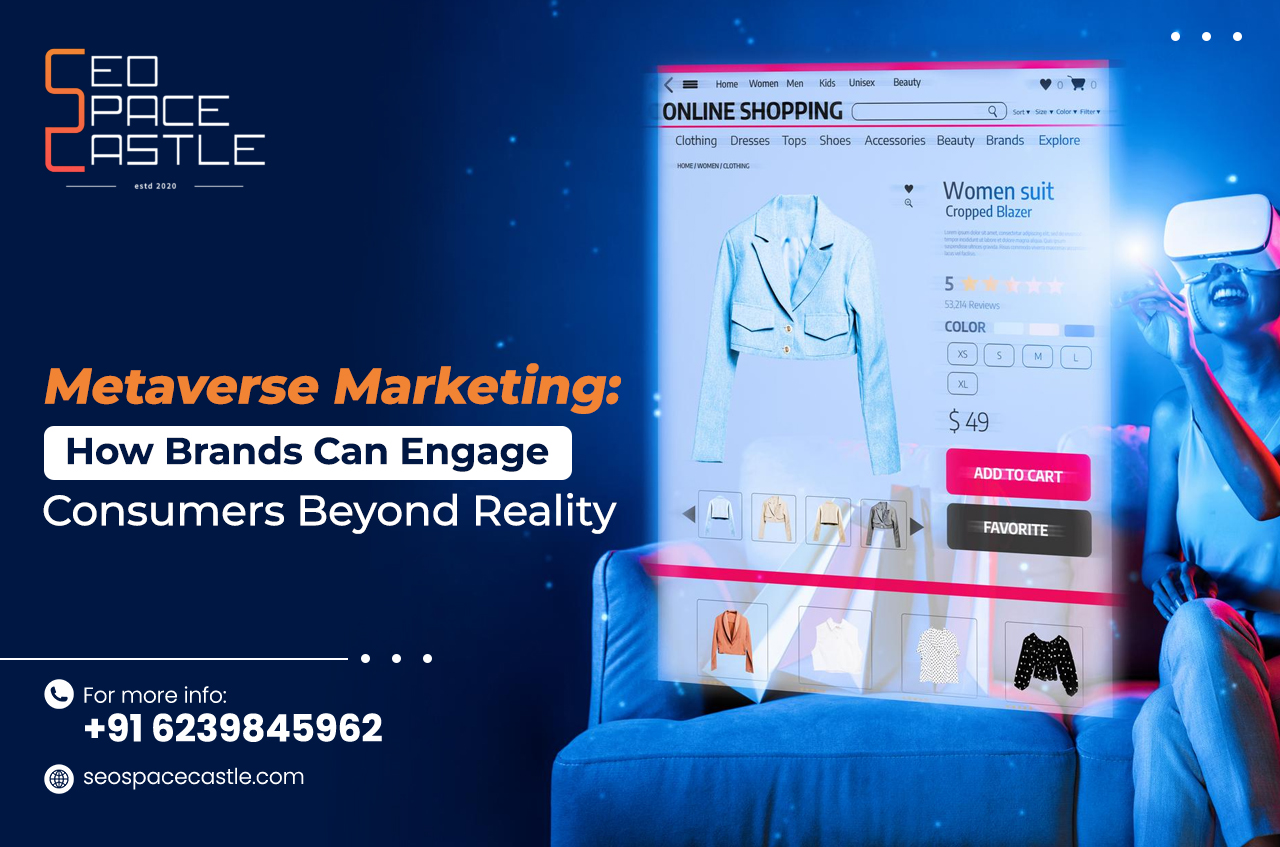
Customers can shop by walking through a virtual store rather than scrolling through product images on a web page. More than just viewing products from afar—instead customers can go into the 3D representation of the store as if they were in a brick-and-mortar store and explore all products at close range with their avatar/model. Companies such as Nike, Adidas, and Gucci, have all developed their own virtual environments for customers to utilize. This type of shopping provides consumers with an enhanced online shopping experience similar to that found in a physical retail store while removing the constraints typically associated with a physical store location.
2.) Gamified Brand Experiences
Brands may use the metaverse as an opportunity to gamify engagement. For example, a car company may allow potential customers to experience "test-driving" a vehicle on a virtual racetrack, or a cosmetics brand may host a series of beauty challenges within a virtual salon, similar to a video game. Additionally, a fitness brand may develop an area in which users earn rewards for completing workouts.
3.) Virtual Events and Launches
Many of the largest global brands now conduct virtual events, including product launches, fashion shows, and concerts. A prime example of this is the Fortnite event hosted by Travis Scott, which drew millions of viewers from around the world. This event highlights how effective VR marketing can be when executed properly; the scope, reach, and level of engagement surpasses traditional, offline events.
4.) Augmented Reality Campaigns
Augmented reality (AR) has become a major player in the world of immersive marketing and is integrated into many product-marketing strategies. AR combines the physical world with virtual elements, allowing customers to experience products before making a purchase decision. Examples of this include virtual try-ons for glasses, visualizing how furniture will appear in a specific space using your smartphone, or utilizing AR filters to enhance beauty products. All of these marketing campaigns make customers feel more secure and confident in their purchasing decisions.
5.) Digital Collectibles and Virtual Goods
Brands are also creating digital collectibles, limited edition virtual items and even digital membership passes. These items give users a sense of ownership and belonging inside the metaverse. They can be used as loyalty rewards, access tickets to events or simply as collectible items that build community value.
4.) How the Metaverse Improves Consumer Engagement
Numerous benefits of today's 3D virtual worlds include:
1.) Limitless Personalization: Millions of possibilities exist through the use of avatars and the environments where customers experience products, making custom experiences achievable through brand building.
2.) Increased Emotional Connection: Simply being in an environment and having the ability to touch and feel products creates an emotional bond with customers, thus building trust, which is what consumers want today.
3.) More Time Spent on Brand: Consumer research has shown that consumers spend more time engaging with brands in the 3D space than they do on brand websites or within other channels such as social media and advertising.
By having customers explore and interact longer, there is a natural progression to creating long-term customer loyalty.
5.) Five AR VR Marketing Strategies Brands Should Use
1.) 3D Story Telling Worlds
As an example, storytelling can be made even more influential through the option of going beyond passive viewing and instead of just looking at a story, users can go into the story themselves. Brands can do this by creating entire 3D environments that would allow customers to immerse themselves in the story of a brand.
2.) Virtual Try On Features
The businesses that benefit from this method would be beauty, clothing, accessories, car dealerships and furniture retailers; all these types of products are applicable to virtual try-ons because it eliminates many of the potential confusion for the customer and instills much more trust in them, which will lead to more rapid decision-making.
3.) Create Mini Branded Interactive Games
When mini branded games are created within a virtual space, they are effective at capturing immediate attention. Mini-games create enjoyable distractions from whatever the user may currently be engaged in, thus creating lasting impressions; they are highly shareable.
4.) Create Digital Twins of Products and/or Virtual Store Layouts
Digital twin technology allows the customer to have a clear visual representation of what a product or store will look like prior to the customer actually purchasing it; therefore, increasing the customer's ability to make a confident buying decision.
5.) Community Areas
Brands could provide their customers with virtual community lounges, clubs or other similar types of communal meeting places that encourage users to connect with one another and share experiences; these create a better sense of community and, in turn, loyal customers.
Final Words
In the past few years, marketing has transitioned into a completely new direction with the emergence of the Metaverse. The combination of technology, creativity and interaction with consumers are things that traditional forms of marketing cannot provide. Through virtual reality marketing, consumers will be able to engage with brands, products and services in an entirely new way, enabling brands to engage with consumers who are accessible via digital means instead of physical means.
Brands that choose to enter the Metaverse early will benefit greatly from the opportunity to create truly immersive brand experiences. The consumers of today desire experiences that are real, unique and interactive. The Metaverse is where these types of experiences are being created.